Quick answer: The best AI note taker in 2026 does more than transcribe. Tools such as Otter, Fireflies, Fathom, Avoma and tl;dv handle recording and summaries well, but Acta is built around execution: role-based AI agents, action items with owners, tickets and reports, integrations with tools like Jira and Salesforce, and answers drawn from every meeting your team has had.
The way businesses run meetings has changed for good. Remote work, global teams and constant collaboration have made meetings one of the most important sources of business knowledge. They are also one of the biggest productivity bottlenecks: decisions get lost, action items are forgotten and follow-ups slip.
That problem has driven huge demand for AI note takers. Most of them solve transcription and summarization, but organizations now need more than notes: actionable outputs, workflow integration, security, cross-meeting intelligence and role-specific insights. This is where Acta stands apart.
What is an AI note taker?
An AI note taker is software that joins meetings or processes recordings to:
- Record audio and video
- Transcribe speech into text
- Identify speakers
- Summarize discussions
- Extract action items and decisions
The better tools go beyond transcription into meeting intelligence: insights, analysis and workflow automation built on top of the transcript.
Which AI note takers lead the market in 2026?
The category has grown quickly, driven by remote and hybrid work, rising meeting volume, pressure to execute faster and demand for accountability and documentation. Popular options include:
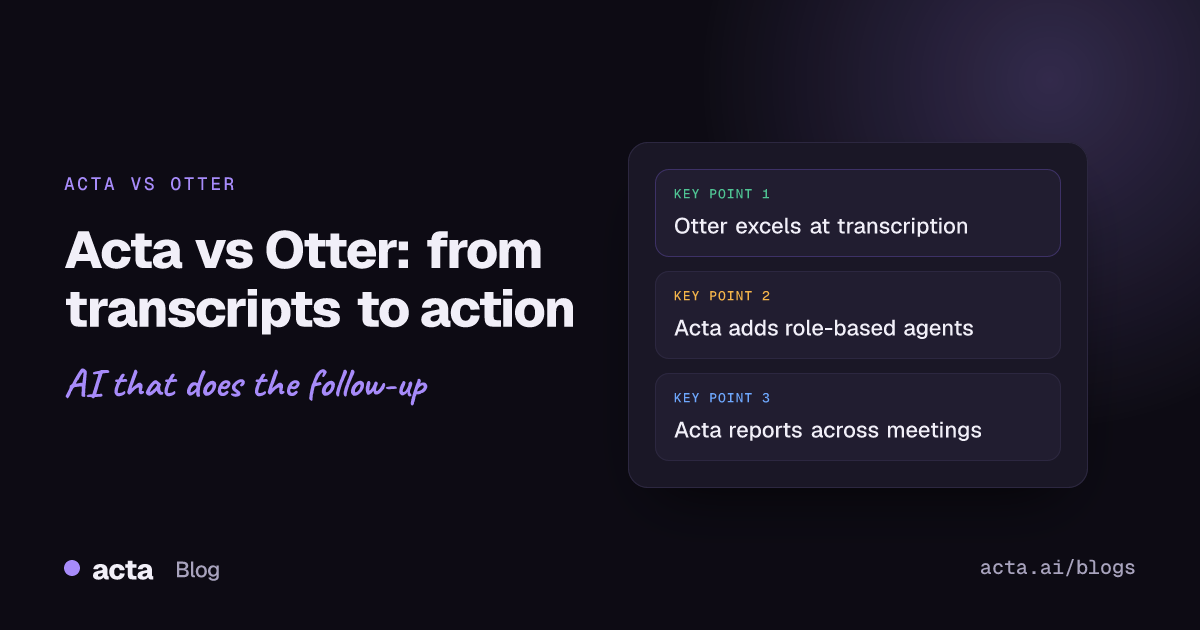
- Otter: a transcription-first AI note taker (see Acta vs Otter)
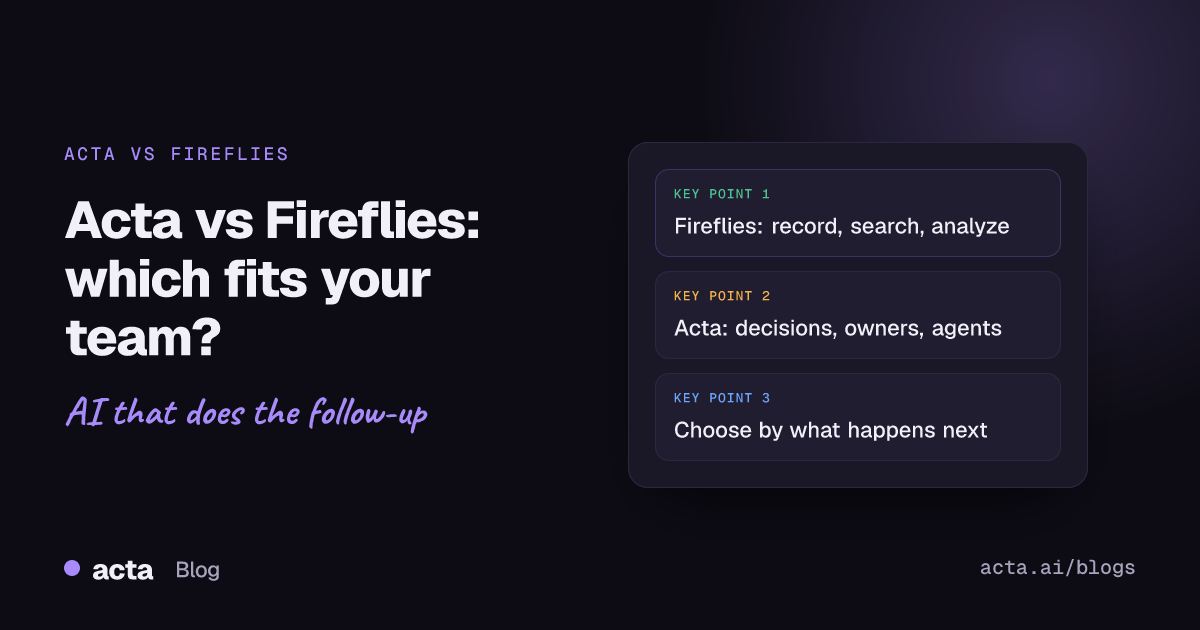
- Fireflies: meeting recording and searchable notes
- Fathom: meeting highlights and summaries
- Avoma: revenue and sales meeting intelligence
- tl;dv: lightweight meeting recording and sharing
- Acta: persona-based, execution-focused AI meeting intelligence
All of them fit under the "AI note taker" label, but their depth, intelligence and business impact vary a lot. For a side-by-side view of more tools, see how Acta compares with other meeting tools.
What are the limits of traditional AI note takers?
Most AI note takers focus on documentation, not execution. Common gaps include:
- Static summaries that still need manual interpretation
- No direct task or ticket creation
- No role-specific insights
- No consolidation across multiple meetings
- Limited controls for enterprise use
- Notes that stay isolated instead of becoming organizational knowledge
As a business grows, these gaps start to matter a great deal.
How is Acta different from other AI note takers?
Acta is not just a note taker. It is a persona-based meeting intelligence platform designed to turn conversations into business outcomes, closing the biggest gap in the market:
Turning meetings into execution.
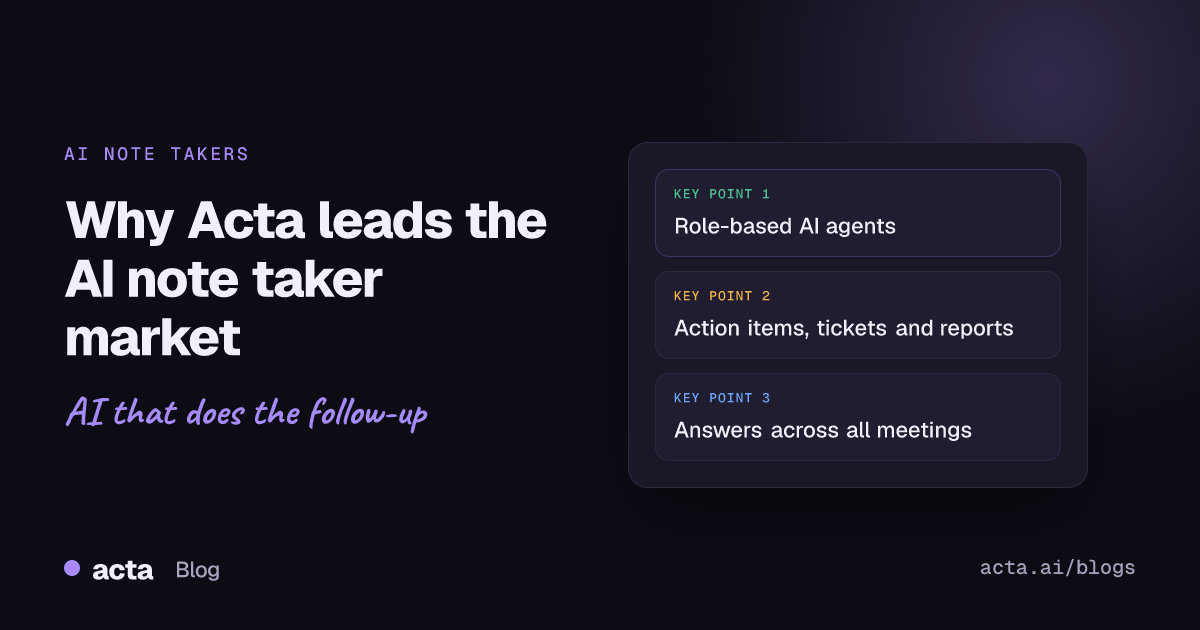
1. Persona-based note taking
Generic note takers treat every meeting the same. Acta's AI agents are built for specific roles, including sales, product management, engineering, HR and hiring, customer support, and leadership. Each one pulls out different insights. For example:
- A sales meeting produces CRM-ready summaries, next steps and qualification notes using frameworks like MEDDPICC or BANT
- A product meeting produces requirements and Jira tickets
- An interview produces a structured candidate assessment
2. From notes to action
Most note takers stop at transcripts and bullet-point summaries. Acta goes further and produces action items with owners and due dates, tickets, reports, follow-up email drafts and business documents such as PRDs.
It connects to the tools where work already happens, including Jira and other ticketing tools, Salesforce, HubSpot, Notion, Confluence and Google Drive. That removes manual hand-offs and makes it far more likely a meeting leads to an outcome.
3. Multi-meeting consolidation
Traditional note takers work one meeting at a time. Acta connects the dots. It can:
- Consolidate discussions from several meetings into one report
- Track decisions over time
- Surface risks or blockers that keep coming up
- Build long-term organizational memory you can query with OneChat
That matters most for ongoing projects, product roadmaps, customer accounts and leadership alignment. Read more about asking questions across every meeting you have had.
4. Agents that work for the team
Acta's agent-based design lets organizations put intelligence where it matters. Agents can produce project status reports, highlight risks and blockers, point out follow-ups that have not happened, and show where a decision is still missing. That moves Acta from passive note taking toward active meeting intelligence.
5. Security built in
Security is often an afterthought in note-taking tools. In Acta, people only see the meetings they have access to, so sensitive conversations stay with the right people. That makes it a fit for enterprises and regulated teams in areas like finance and healthcare. Details are on our security page.
Why is Acta the best AI note taker in 2026?
Acta stands out because it:
- Goes beyond transcription
- Understands business context
- Automates the work that follows a meeting
- Consolidates intelligence across meetings
- Scales from small teams to enterprises
It is built for high-growth companies, enterprises and any team that cares about outcomes, not just notes.
The market is crowded, and not all AI note takers are equal. If you only need to record meetings, many tools will do. If you want to turn meetings into execution, alignment and results, Acta is built for exactly that.
Frequently asked questions
What is the difference between an AI note taker and meeting intelligence?
An AI note taker records, transcribes and summarizes. Meeting intelligence adds action items, decisions, role-specific analysis, cross-meeting answers and integrations that move work forward.
Which AI note taker is best for enterprise teams?
Enterprise teams usually need role-based outputs, integrations with tools like Jira and Salesforce, cross-meeting reporting and access controls. Acta is designed around those needs.
Does Acta need a bot to join my meetings?
No. Acta can join Zoom, Google Meet or Teams as a bot, but you can also record with the bot-free desktop app, the Chrome extension or the mobile apps, or upload a recording.
Can I try Acta before buying?
Yes. Acta offers a free 15-day trial.
See the difference on your own meetings: start your free 15-day Acta trial.